

The Standing Order: Auditing Linen, Janitorial and Food Invoices
These are not summaries. They are delivery receipts, priced line by line and signed for by whoever was standing there.
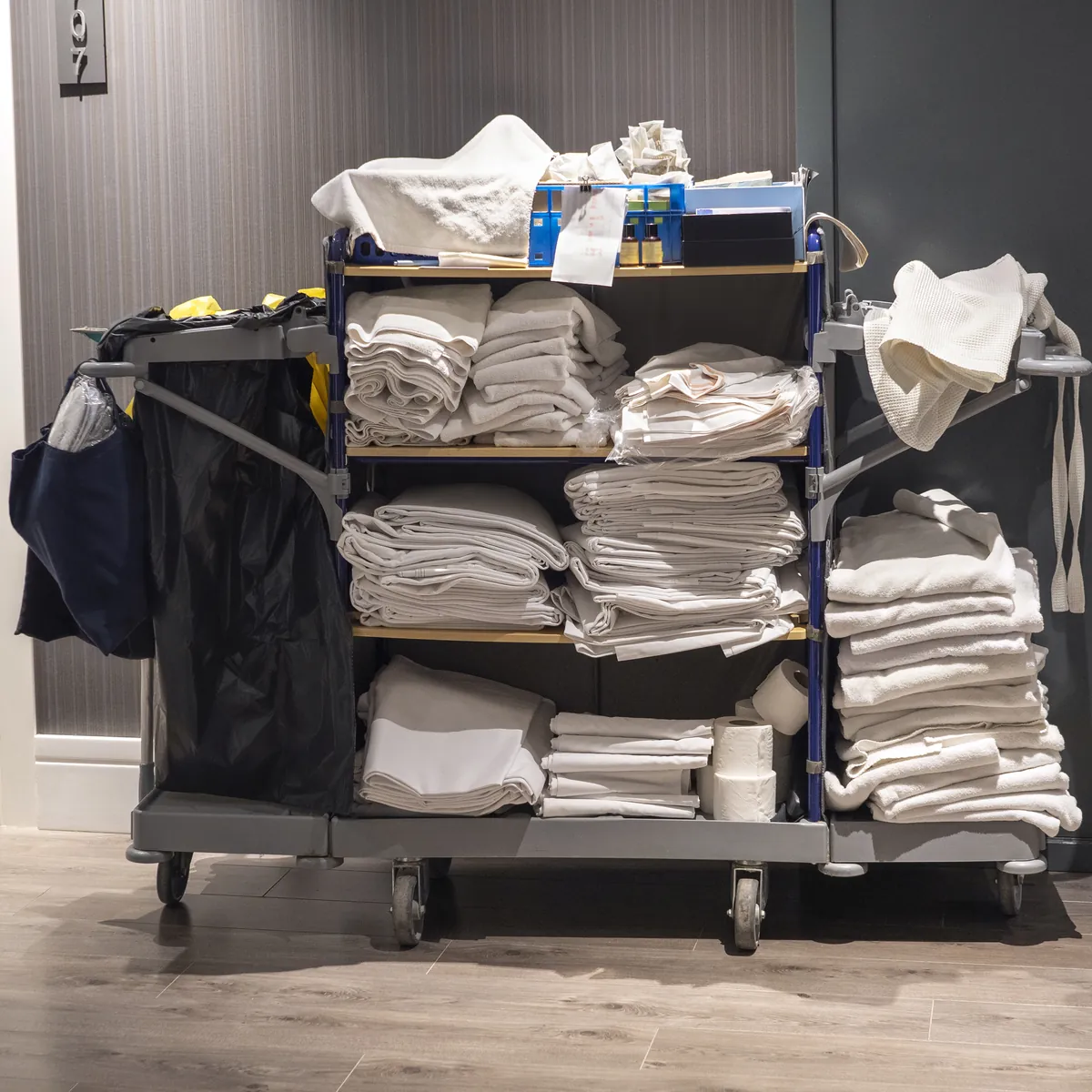
Every business has a set of invoices that arrive so regularly they stop registering as decisions. The linen company on Tuesday, the janitorial supply order, the food distributor twice a week, the uniform rental, the waste hauler. Each one is individually small, all of them are contracted, and together they are frequently the largest category of spend that has never been checked against its own agreement.
They share a specific weakness. Unlike a bank statement or a processing statement, these invoices are not summaries. They are delivery receipts, priced line by line, signed for at a back door by whoever was standing there. The control point is at the moment of delivery, and almost nobody is exercising it.
The document you are auditing against
Start by finding the price file. Most of these agreements have one: a schedule of agreed items at agreed prices, often an attachment to a contract signed years ago and filed by somebody who has left.
If you cannot find it, that is the first finding. An invoice with no agreed price list behind it is not being checked by anyone, because there is nothing to check it against. Ask the vendor for the current price file in writing. The request is routine and the answer is revealing.
Price drift on the core list
The most common finding is the least dramatic one: items on the contracted list billed above the contracted price. Not everything, and rarely by much, which is what makes it survive. A few cents on a napkin, a few percent on a case, repeating twice a week for three years.
Check the contracted items first, because those are the ones where the agreement gives you a plain answer. A variance there is not a negotiation, it is a billing error, and it is usually credited without argument once it is in front of somebody with the price file open.
The off-contract problem
Then look at everything not on the list. Contracts typically fix prices for a core set of items and leave everything else at the vendor's prevailing price. Over time, ordering drifts toward the second set: a product gets discontinued, a substitute arrives, a new location orders something different, and the substitute is off-list.
Count what proportion of spend is off-contract. If the core list was negotiated to cover most of your ordering and now covers half of it, the negotiation has been quietly undone without a single price changing.
Substitutions
Out of stock items get substituted at delivery. That is normal and often necessary. What needs checking is whether the substitute was billed at the original item's contracted price or at the substitute's own price, and whether the substitute was an equivalent product or an upgrade you did not ask for.
Substitution is worth watching as a rate rather than an incident. A vendor whose fill rate on your contracted items is persistently low is, in effect, operating outside the agreement most of the time.
Charges for quantity rather than price
Half of what goes wrong here is not the price at all. It is the count.
- Billed but not delivered. The short delivery that nobody noted because nobody counted at the door. This is the reason a signature on a delivery ticket matters: it is the only moment the quantity is verifiable.
- Catch weight items. Anything priced by the pound and delivered by the case, meat and produce especially, is billed on a weight recorded by the supplier. Spot weighing a sample of deliveries is the only way to know whether the recorded weights are right.
- Linen counts. Rental linen is billed on pieces delivered, and the bill frequently assumes the standing order rather than reflecting the delivery. Loss and damage charges deserve the same scrutiny: ask for the evidence, because the charge is often a default rather than a finding.
- Minimums. Weekly minimums and delivery minimums on a route that no longer matches your volume, so you pay for capacity you stopped using.
The surcharges
Fuel surcharges are the ones to look at hardest, for one reason: they are usually defined in the contract as a formula tied to a published fuel index, and they are supposed to move in both directions. A surcharge that rose with fuel and then stayed put is the single most checkable overcharge in this category, because the index is public and the formula is in your agreement.
Alongside those sit environmental fees, energy surcharges, delivery fees and small order fees, each of which may be perfectly legitimate and each of which should appear in the contract if it is going to appear on the invoice. The test throughout is the one in the junk fee field guide: not whether a charge sounds official, but whether you agreed to it and whether it does what its name says.
Rebates and deviated pricing
In distribution, particularly food, manufacturers pay distributors for volume. Depending on your agreement, some of that may belong to you, through a cost plus arrangement where you see the landed cost and the distributor's margin separately, or through deviated pricing negotiated directly with a manufacturer and passed through.
The question to ask is simply which model you are on and whether the invoice shows you enough to tell. A cost plus agreement that never shows the underlying cost is not really cost plus. Restaurants in particular tend to hold several of these relationships at once, which is worth reading alongside what restaurants actually pay to take a card: the two together often account for most of the controllable spend in the building.
Exclusivity and the automatic renewal
Many of these contracts carry an auto renewal with a notice window, and some carry exclusivity, meaning you agreed to buy a category solely from this vendor. Both are worth knowing before you negotiate, because they determine whether you have an alternative at all. Diary the notice deadline minus 30 days on the day you sign, the same discipline that applies to every other recurring agreement.
Making it stick
The reason this category recovers money and then loses it again is that the control is operational. A price file checked once is correct for a quarter.
Three things hold it. Someone counts at the door and initials the ticket against what was ordered. The price file lives somewhere accessible rather than in a drawer. And the invoices get compared to that file on a schedule rather than when somebody happens to wonder. That last part is the argument for treating an audit as a subscription rather than an event, and it applies here more than anywhere, because these invoices arrive more often than any others you receive.
See what your statements are hiding.
Drop a statement into AIME and get a line-item savings analysis in minutes. No retainer, no hourly fees: you pay only when AIME recovers savings.
Run a free live audit