

Surcharging, Cash Discount and Dual Pricing: What Is Actually Allowed
Passing processing costs to the customer is legal in most of the country and heavily conditioned everywhere. The conditions are where merchants get into trouble.
Somewhere in the last few years a salesperson told you that you could stop paying processing fees entirely. The offer is real, the mechanism is real, and the version most merchants end up running is not quite the one that was described.
Three distinct programs get sold under the same pitch. They have different rules, different disclosure requirements and different consequences for getting them wrong, and the first useful step is knowing which one you are actually operating.
The three programs
Surcharging
An explicit extra charge applied to credit card transactions, shown as its own line on the receipt. This is the one with the most specific network rules attached, and the ones that matter most in practice are these: it applies to credit only and never to debit or prepaid, even when a debit card is run as credit; the surcharge cannot exceed your actual cost of acceptance, and is capped by the networks besides; you must notify the card networks and your acquirer in advance; and signage is required at the entrance and at the point of sale, with the amount disclosed on the receipt.
The debit exclusion is where compliant intentions go wrong most often. It requires the terminal to identify card type correctly at the moment of sale and apply the charge conditionally. A program that surcharges everything is not a badly configured program; it is a non-compliant one.
Cash discount
A single posted price with a discount for paying in cash. The structural difference is that the posted price is the card price, and cash buyers get less than it. Nothing is added to a card transaction, so the network surcharge rules are not engaged.
This is the program most often sold and least often implemented correctly. A "cash discount" that displays a price and then adds a percentage at checkout is a surcharge wearing a different label, and it is judged on what it does rather than what the sign calls it.
Dual pricing
Both prices shown for every item: one for cash, one for card. It is the most transparent of the three and the most operationally demanding, since every shelf label, menu and online listing has to carry two numbers. Where it is done properly it tends to attract the fewest complaints, because nothing about the total is a surprise at the till.
Where the law differs from the network rules
There are two separate rule sets and you have to satisfy both. Card network rules apply nationwide by contract. State law applies on top, and it has been a moving target: several states have historically restricted or banned credit card surcharging, some of those restrictions have been struck down or narrowed in court, and disclosure requirements have been tightened in others. A few states additionally regulate how the price must be displayed rather than whether a surcharge is allowed at all.
Cash discounting is generally treated more permissively than surcharging, which is precisely why so many programs are described that way. That description only helps if the implementation matches it.
What it does to your economics
The pitch is that processing becomes free. The reality is more mixed, and worth modeling before committing.
- Debit still costs you. Debit cannot be surcharged, and in many businesses debit is a large share of volume. Those transactions keep their full cost.
- Your effective rate does not improve. The cost is being shifted, not reduced. If your markup was uncompetitive before the program, it still is, and now your customers are paying it. Benchmarking the underlying rate matters more after adopting one of these programs, not less. See What Is a Good Effective Rate.
- There is a behavioral cost. Some customers walk, some complain, some pay cash. In low-margin retail the shift can be worth it; in hospitality and professional services the reaction is often sharper than the savings.
- Program fees are common. Many surcharge and cash discount programs carry their own monthly charge, and some carry a share of the surcharge collected. Read that line: a program billed as free frequently is not.
How to check your own program
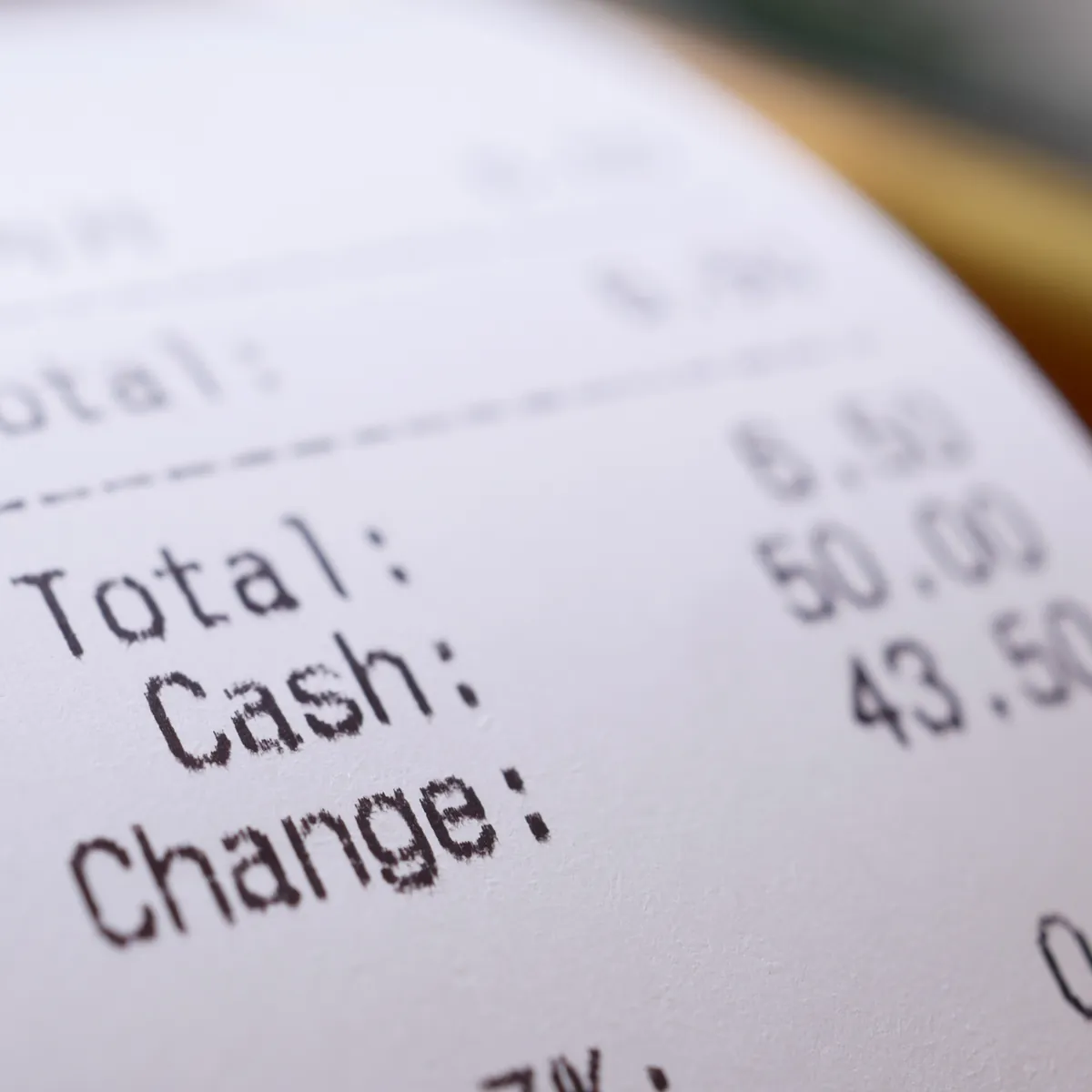
- Read a recent customer receipt. A separate line naming a surcharge or service fee means you are surcharging, whatever the program is called.
- Run a debit card. If the extra charge is applied, the program is misconfigured and the exposure is real.
- Compare the extra charge against your actual cost of acceptance from your statement. Charging above cost is a rule breach as well as a customer relations problem.
- Walk the entrance and the point of sale looking for the required disclosures, and check the online checkout separately, since it is usually missed.
- Find the program's own fees on your statement and count them against the savings.
Frequently asked questions
Can I surcharge debit if the customer runs it as credit?
No. The exclusion follows the card, not the routing choice at the terminal. This is the single most common compliance failure in the category.
Does this work for online sales?
It can, and the disclosure requirements are stricter in practice because there is no counter to put a sign on. The price and any added charge have to be clear before the customer commits, not revealed on the final screen.
Is my processor responsible for compliance?
Your processor configures the program. The merchant agreement almost always places responsibility for compliance with the merchant. Written confirmation of what is configured is worth having on file.
Should I do it at all?
It depends on your margin, your customers and your debit mix, and it is a decision to make after you know your true cost rather than before. Audit the statement first: many businesses discover the markup they were about to pass to customers was negotiable all along.
See what your statements are hiding.
Drop a statement into AIME and get a line-item savings analysis in minutes. No retainer, no hourly fees: you pay only when AIME recovers savings.
Run a free live audit